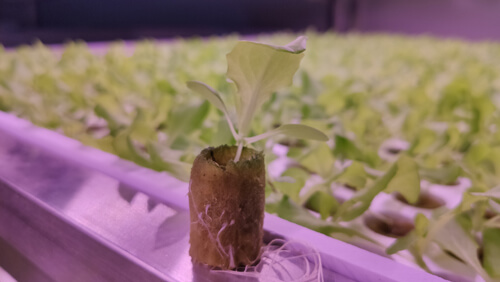
The Advantages of Switching from Coco Coir to Rock Wool Substrate for Cannabis Cultivation Views: 53
In cannabis cultivation, substrate selection plays a critical role in determining plant health, yield potency, and overall efficiency. While coco coir has been a popular choice due to its organic composition and water retention, rock wool is increasingly favored by commercial growers for its precision, consistency, and superior root zone control. This article explores why transitioning from coco coir to rock wool growing medial can significantly enhance cannabis production, particularly in hydroponic and controlled-environment systems.

1. Optimized Water and Oxygen Balance for Healthier Roots
Cannabis roots thrive in well-aerated, evenly moist environments—conditions that rock wool provides more reliably than coco coir.
Precise Moisture Control – Unlike coco coir, which can retain inconsistent moisture levels (leading to dry spots or overwatering), stone wool distributes water uniformly, preventing root stress.
Superior Oxygenation – The porous structure of stone wool ensures optimal air exchange, reducing the risk of root rot (e.g., Pythium) and promoting vigorous root development.
Ideal for Automated Irrigation – Stone wool responds predictably to drip systems, making it perfect for high-frequency fertigation strategies used in cannabis cultivation.
2. Consistent Performance for Predictable Yields
Coco coir’s natural variability (pH, EC, and fiber composition) can lead to inconsistent growth, whereas stone wool offers:
Uniform Physical Properties – Every slab or cube provides identical structure, eliminating variability between plants.
Neutral pH & No Buffering Needed – Unlike coco coir (which often requires pre-treatment to remove excess salts and stabilize pH), stone wool is inert and ready for immediate use.
Stable EC Management – Since stone wool doesn’t interact with nutrients, growers maintain precise control over feed strength, crucial for cannabis flowering phases.
3. Reduced Risk of Pathogens and Contaminants
Coco coir, being organic, can harbor fungi, bacteria, or pests if not properly processed. Rock wool substrate provides:
Sterile Starting Environment – Manufactured at high temperatures, stone wool is free from mold, pests, and weed seeds, reducing the need for sterilization.
No Decomposition Over Time – Coco coir breaks down, altering its drainage and aeration properties, while stone wool remains structurally stable throughout the grow cycle.
4. Enhanced Nutrient Uptake and Faster Crop Response
Cannabis is highly responsive to nutrient availability, and stone wool’s inert nature allows for:
No Cation Exchange Interference – Unlike coco coir (which can bind and release nutrients unpredictably), stone wool delivers nutrients exactly as formulated.
Immediate Adjustment Capability – If nutrient deficiencies or toxicities arise, corrections take effect faster in stone wool than in coco coir.
5. Improved Sustainability and Reusability
While coco coir is biodegradable, rockwool hydroponic media offers eco-friendly advantages:
Recyclable Material – Many rock wool products can be recycled into new substrates or construction materials.

Conclusion: Why Cannabis Growers Are Making the Switch
For cultivators focused on maximizing yield, potency, and efficiency, stone wool provides distinct advantages over coco coir:
✔ Precision control over root zone conditions
✔ Consistent performance across all plants
✔ Lower risk of disease and root issues
✔ Faster nutrient response for optimized growth
✔ Better compatibility with automated hydroponic systems
While coco coir remains a viable option for organic growers, stone wool is the preferred choice for commercial cannabis producers who demand reliability, scalability, and high returns. By adopting stone wool, cultivators can achieve higher-quality harvests with fewer variables, making it a smart investment for modern cannabis operations.






 Return